
Why I Started Using Rabby Wallet — and Why DeFi Power Users Should Care
Strategie avanzate per massimizzare le vincite nel blackjack Eurobet con wb – 5e
19 de dezembro de 2025New Zealand Mobile Pokies
3 de fevereiro de 2026Whoa! I didn’t expect a browser extension to change my daily DeFi workflow. Seriously? Yep. At first it felt like another wallet—something familiar and safe. But then a couple of trades went sideways in other wallets and my instinct said: there has to be a better way. Initially I thought a prettier UI was the answer, but then I realized simulation and clearer signing flows actually move the needle for advanced users.
Here’s the thing. If you use multiple chains and do complex transactions—multi-hop swaps, contract approvals, bridging—small mistakes cost real money. My gut told me that being careful wasn’t enough; I needed tools that made care practical. Rabby brings transaction simulation, multi-account management, and hardware wallet support into a single extension. That combo reduces surprises in ways that feel subtle until you rely on it day after day.
Okay, so check this out—installing the extension is straightforward. Download from the official source, add the extension to Chrome or Firefox, and either restore a seed or create a new account. It supports connecting hardware wallets, which I use for high-value accounts. I’ll be honest: I’m biased toward anything that forces me to slow down before I sign. This part bugs me about most wallet flows—they rush you. Rabby doesn’t.
What Rabby gets right for DeFi power users
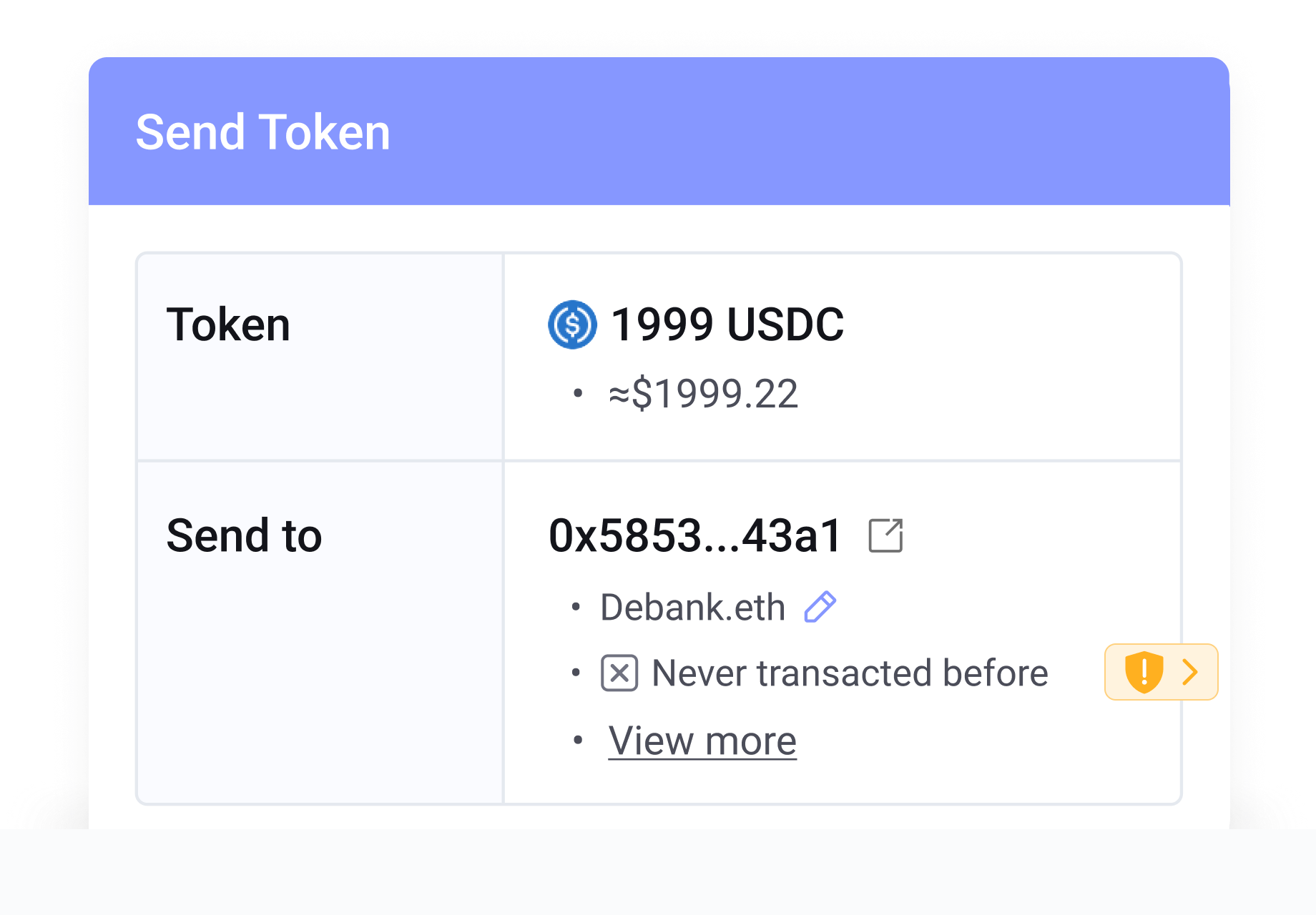
First: transaction simulation. It shows what a transaction will do on-chain before you sign. That single feature prevents a surprising approval or a swap that routes through garbage tokens. On one hand simulation isn’t infallible—though actually it’s often enough to catch the dumb mistakes that cause 90% of my grief. Initially I thought simulation would be slow or clunky. Actually, wait—let me rephrase that: the first few simulations felt slow, but after a couple updates it became fast and reliable.
Second: multi-chain convenience. You can add several networks without juggling multiple extensions. That matters if you hop between Ethereum, optimism, BSC, and a couple of testnets. I carry multiple accounts—some are hot, some are hardware-backed—and Rabby makes switching quick. My workflow became tighter. Less context switching. Somethin’ about that is freeing.
Third: hardware wallet compatibility. I connect my Ledger when I’m moving serious funds. There’s less cognitive load when you see exact parameters and a simulated outcome before you tap the device. Trust is built in layers—UI + simulation + hardware signing—and that stack works very very well.
Now, there are nuances. Rabby doesn’t solve every problem. For example, cross-chain bridging still has risk that simulation can’t fully account for because of routing or relayer behaviors. Also, some defi contracts behave unpredictably when gas strategies change. You still need to know what you’re doing. But the extension nudges you toward safer choices, and the fewer times you have to recover from a mistake, the better.
Installing Rabby: a quick, practical checklist
Step 1: get the official installer—don’t grab a random fork or a sketchy link. I use this official page: rabby wallet. Step 2: add the extension to your browser (Chrome or Firefox). Step 3: choose your security posture: new seed for testing, restore from seed for continuity, or connect a hardware wallet for high-value accounts. Step 4: enable the chains you use and test a small transaction first. Seriously—always test a small tx.
There are a few settings worth toggling right away. Turn on enhanced transaction details if it’s available. Check your gas controls. Link hardware wallets and label accounts so you don’t accidentally use the hot account for a big transfer. I like to add notes to my accounts (in my head at least), so I don’t mix up “trading” vs “cold storage” addresses.
To be clear: if you’re new to wallets, Rabby can be a lot to absorb. But if you’re a power user the learning curve is worth it. It forces better habits. That’s why I stuck with it.
Common scenarios where Rabby saves you money
Swap routing gone wrong. Simulate first. If a swap unexpectedly routes through a low-liquidity pool, the slippage could eat your funds. Simulation shows estimated outcomes so you can cancel or adjust. Bridge hiccups. Sometimes bridging frontends misreport fees; simulating the approval and transfer helps you see true on-chain costs. Approvals. Approving unlimited allowances is a habit—Rabby’s clearer permission screens make you think twice.
On the other hand, no tool can replace discipline. I still manually audit unfamiliar contracts, I still run small tests, and I still keep a separate wallet for dust and risky interactions. Though actually, Rabby reduced my “oops” moments a lot, which in crypto terms is a big win.
FAQ
Is Rabby safe to use for large balances?
Use hardware wallets for large balances. Rabby supports hardware signing which keeps private keys offline. That said, always verify transactions on your hardware device screen and keep your recovery phrase secure.
Can Rabby simulate every transaction?
It simulates many common transaction types, but not every possible edge case. Simulation significantly reduces accidental losses, but it isn’t a silver bullet. For edge-case contracts, extra caution is required.
How do I install Rabby on multiple browsers or devices?
Add the extension to each browser and either restore your seed phrase (carefully) or connect your hardware wallet. Keep your seed and devices secure—and never paste your seed into websites.
Alright—closing thoughts. I’m more skeptical than enthusiastic by default. Still, Rabby moved me from “hope I don’t mess up” to “I can foresee most mistakes.” That shift matters. It changes how I trade, how many approvals I grant, and how I manage funds across chains. If you’re doing DeFi beyond clicking a single swap, it’s worth installing and testing—small txs first. You’ll probably find it helps, though I’m not 100% sure it’ll replace every other tool in your stack. It might though. Hmm… time will tell. Xonata AI
